

Grab a coffee; let’s debrief the month.
Agents did a lot of growing up in June. Softwares that schedule their work, build the app, write the report, and fix production before you’ve noticed it broke.
Snowflake and Databricks held back-to-back summits and shared that ‘an agent is only as good as the data you can give it’. Which, if your data lives in fifteen places and three of them are a mess, hits closer to home than any model launch.
And Anthropic and OpenAI both had their newest frontier models gated by the US government within two weeks of each other.
More on that below.
Anthropic: Tag, scheduled agents, and artifacts in Claude Code
65% of Anthropic’s own product team’s code now gets written by a version of Claude that lives in their Slack. In June, they shipped that idea to everyone, plus two more steps in the same direction.
Claude Tag launched on June 23, replacing the old Claude in Slack app and drops Claude into your channels as a participant.

Tag @Claude, hand over a task, and it plans the steps, uses the tools you’ve connected, and reports back in the thread. It’s one shared Claude per channel that the whole team works with. Anyone can pick up a job a colleague started; it remembers the channel’s history so nobody re-briefs it, and with “ambient” mode on, it volunteers updates and chases stalled tasks without being asked. It’ll even schedule its own work and run for days.
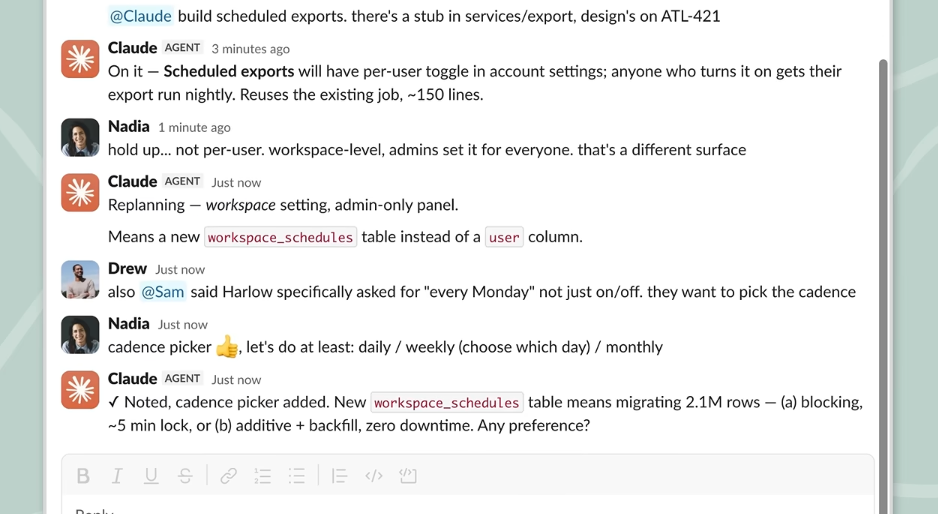
Tag Claude in, right where you already work
Access is scoped per channel, with spend caps and a full audit trail. It’s in beta for Enterprise and Team, runs on Opus 4.8, and you’ve got 30 days to migrate.
Claude Managed Agents got the developer-side version of that same idea on June 9.
Two additions, both in public beta. Agents can now run on a schedule, so the recurring grunt work (a Monday report, a weekly data clean) runs itself. And they can keep environment variables, API keys and the like, in vaults, so an agent reaches your CLI tools and logged-in services without secrets sitting in plain text. The scheduling gets the attention; the vaults are the part that makes an unattended agent something you’d actually sign off on.
Artifacts in Claude Code (June 18) close the loop on the other end. A coding session can now publish itself as a live web page built from the full session context: a pull request walkthrough, a filterable dashboard, an explainer of how a system fits together, a release checklist. It updates as the work runs, and you can hand it to your team.
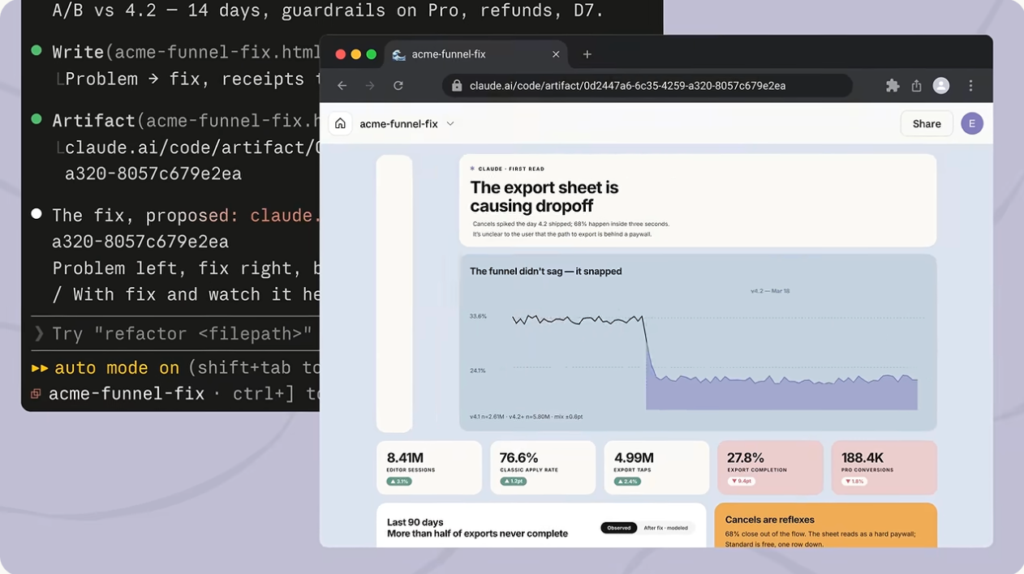
Artifacts in Claude Code: share your work as it happens
The payoff is communication. Anyone who’s finished a long Claude Code run and then fumbled the “so what did it actually do” can now point a non-coder at a page they can read. It’s the Tag instinct again, making Claude’s work legible to the people around it, this time for code.
OpenAI: GPT-5.6 ships to about 20 companies
OpenAI’s newest model arrived on June 26, but you can’t use it (yet).
GPT-5.6 came as a preview in three sizes. Sol is the flagship, built for coding, science, and cybersecurity, with a new top score on the Terminal-Bench 2.1 coding benchmark, a higher “max” reasoning setting, and an “ultra” mode that splits a job across sub-agents. Terra is the everyday model, about half the cost of GPT-5.5 for comparable performance. Luna is the fast, cheap one.
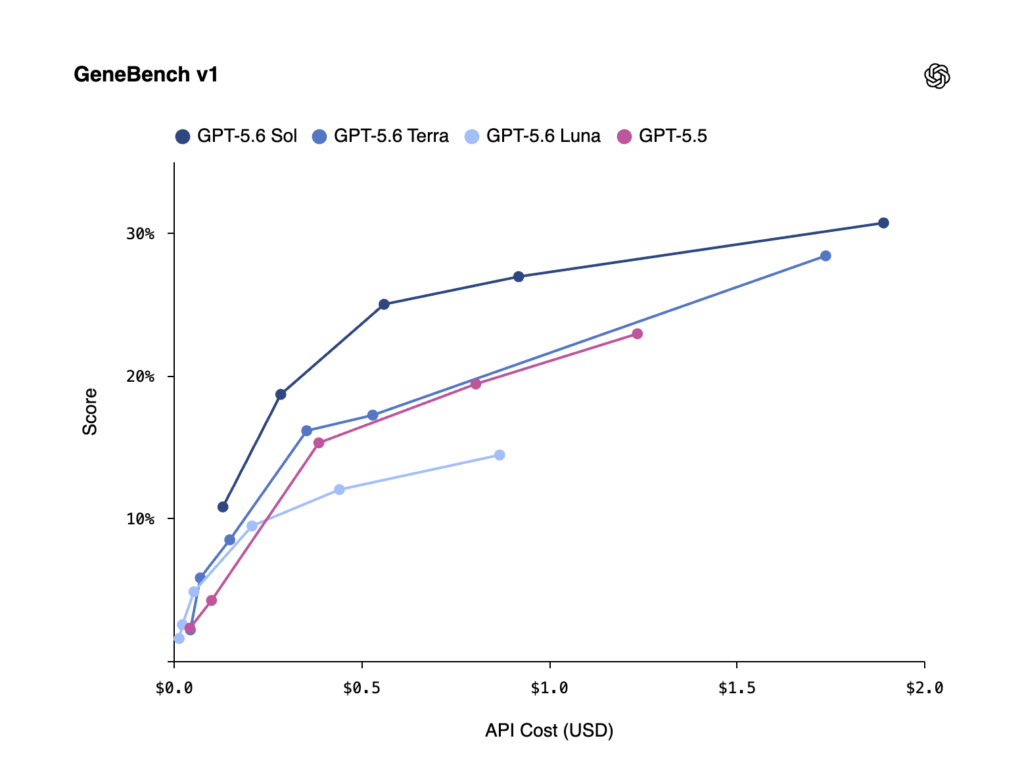
Interestingly, OpenAI could only release the three to around 20 partners the US government had cleared, after weeks of previewing the models with officials. It was openly unhappy about the arrangement, saying it doesn’t think per-release government sign-off should become the default, and expects broader availability within weeks.
This is the second time in a month a US lab has been told to hold back its frontier release. Anthropic had to switch off Fable 5 and Mythos 5 on June 12 under an export-control directive. The most capable models now reach almost no one until Washington clears them.
Snowflake talks about context
The Snowflake Summit ran June 1 to 4 in San Francisco: 20,000-odd people, 26-plus announcements. Their main idea: ‘An agent is only as good as the data you can give it, and most companies’ data is nowhere near ready to give’.
Horizon Context is Snowflake’s fix for that. It pulls your scattered data, the stuff sitting in Snowflake, in external lakes, in open systems, into one governed layer that people and agents can actually query, no copying things around first.
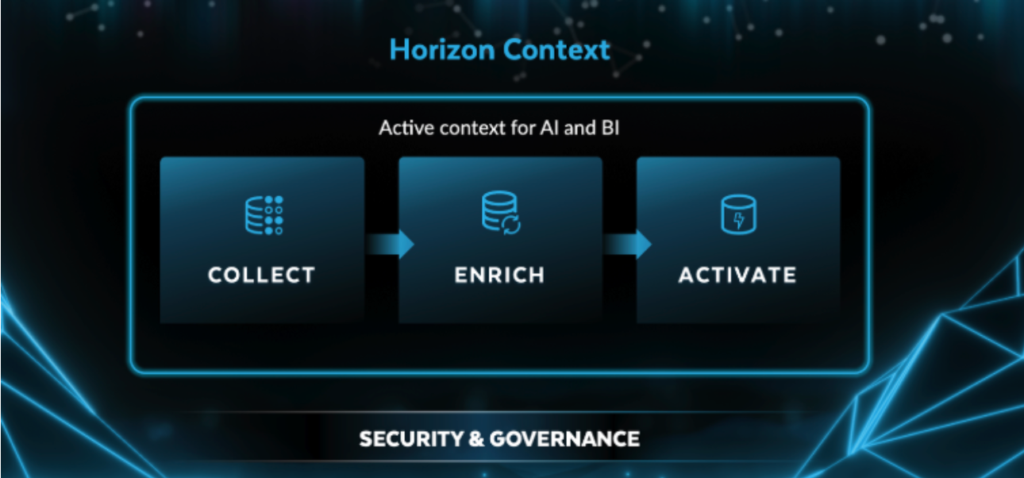
The context is the hard part of getting agents to work, and it is the bit Snowflake wants to own.
CoWork is the agent that rides on top. It’s really a rebrand and beef-up of what used to be Snowflake Intelligence, pointed at knowledge workers, with a companion called CoCo.
- What is Cowork? Snowflake CoWork (formerly Snowflake Intelligence) is the personal work agent where you work smarter. Available at ai.snowflake.com, it gives knowledge workers one place to ask questions of their enterprise data, get cited answers, automate multi-step work as Skills (public preview soon), and take action across Gmail, Jira, Slack, Salesforce and more, within Snowflake’s governed platform.
And to wire all these agents into your actual tools, Snowflake’s buying Natoma, an MCP gateway company, so an agent can reach your apps and APIs without poking security holes everywhere.
For anyone who spends their days getting data into shape, that’s the industry catching up to you.
Databricks: building agents
Two weeks after Snowflake, Databricks packed 30,000 people into Moscone (June 15 to 18) and made broadly the same argument. Ali Ghodsi’s keynote line was that AI has a context problem: a model can’t tell your CFO why margins moved if it can’t see the right governed data.
So yes, the context layer is here too. Genie Ontology is a self-updating layer that learns your business knowledge from your data and connected apps, and Genie One, the agent people actually talk to, went generally available.
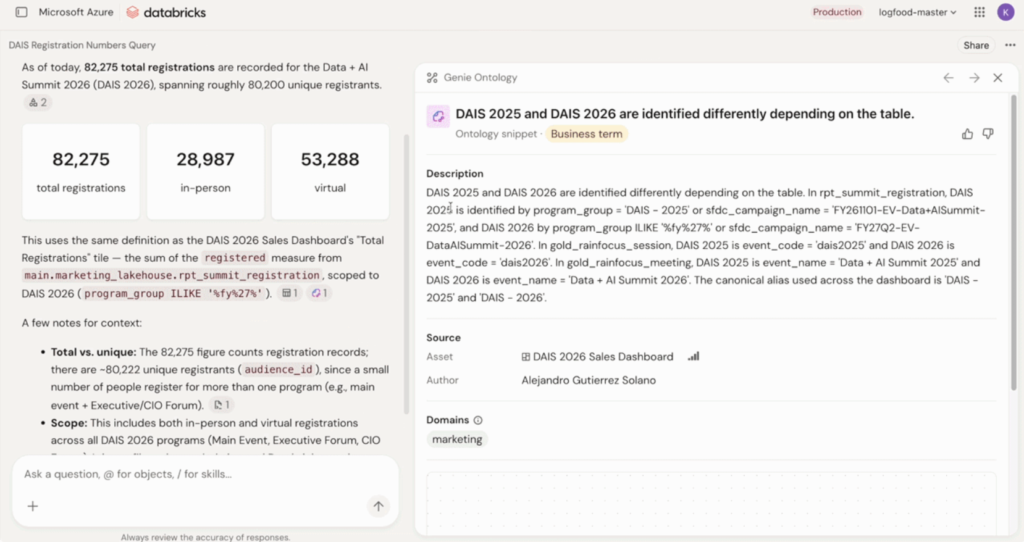
Genie Ontology, Databricks 2026
How far past answering questions did Databricks push?
Agent Bricks lets you build your own agents. Genie App Builder turns a plain-English description into a working internal app wired to governed data, vibe-coding for people who’d never open a notebook. And Genie ZeroOps is a background agent that watches your production systems, catches drift or a bad deploy, then builds and tests a fix before it ever touches live traffic. Agents doing the operational work themselves.
Underneath all that, two pieces of infrastructure earned the stage. Lakebase is managed Postgres built for agents, with instant copy-on-write branching: spin up a full copy of a production database, let an agent loose on it to reproduce a bug, bin the copy when you’re done. Lakehouse//RT does sub-second queries straight on the lake, quick enough to sit behind a live dashboard. And Lakeflow Designer, the drag-and-drop pipeline builder for non-engineers, went GA.
Snowflake spent its summit handing agents context. Databricks spent its time handing them work to do.
Power BI: the agent moves into the report itself
You can now hand Power BI a request as vague as “build me an executive dashboard” and an agent will run it through requirements, design, build, and publish, reloading Desktop along the way to check its own work against live screenshots.
Two new pieces make that work. Report-authoring agent skills (part of Skills for Fabric) handle the guided build, and the new Desktop Bridge lets an agent plug into a running Power BI Desktop session and edit a report in a loop: change it, render it, check it, adjust. If you’ve paired Claude with Power BI before, the Desktop Bridge is the part that lets an agent build the report and verify its own rendering.
Copilot in web modeling (preview) goes after the layer underneath. Point it at a messy semantic model, and it’ll rename tables, build relationships, and write DAX measures from a plain-language prompt, no Desktop required.
Two more in the same direction: Fabric Apps let you build a working operational app on top of a semantic model and reuse its governance, and Fabric IQ pushes governed Power BI data into Microsoft 365 Copilot, so someone can ask a business question in chat and get an answer grounded in your actual model.
PBIR, the enhanced report format is edging toward default-on. Once reports are saved as readable files rather than a single binary, source control can track them, and an agent can edit them safely. If you build in Power BI, that .pbip-as-code is the piece that makes everything above safe to use on a real project.
Lastly, a question for you
At i-spark, we like to explore different views, thus we often chat with colleagues and seek different perspectives
Here’s a question for us for your next coffee break, with a colleague:
How much of your time last month went on doing the work, and how much on checking the agent’s?