Turn business questions into shared logic with Looker
Looker helps keep metrics consistent while questions evolve and usage expands. We support you in building a setup that stays reliable as more people depend on the same data.


Looker helps keep metrics consistent while questions evolve and usage expands. We support you in building a setup that stays reliable as more people depend on the same data.
LookML allows core metrics and dimensions to be defined centrally. Revenue, ticket sales, conversion or attendance have one agreed meaning, regardless of where they appear.
This reduces ongoing debates about numbers and makes reporting easier to maintain as usage grows.
Looker allows non-technical users to explore data freely within clear boundaries. For example the creative marketers establishing your creative business strategy.
Business users can ask new questions without changing core logic, while analysts retain control over definitions and structure.
Looker treats analytics like code. Models are versioned, reviewed and deployed through familiar workflows.
This makes collaboration within your company more predictable and reduces accidental changes.
Metrics, dimensions and relationships are defined once and reused everywhere. This creates a clear separation between what the data means and how it is visualised.
That difference becomes critical when reporting spans multiple teams or brands, KPIs must stay aligned over time, and analytics is part of daily decision-making.
Looker is a strong choice when reporting needs to hold up under growth.
The tool is often a good fit when:
- Different dashboards show different numbers today
- Multiple teams rely on the same KPIs
Marketing, finance, operations or leadership need aligned definitions
- Reporting needs to scale without constant rework
- Analytics supports daily decisions.
Looker performs best when dashboards are part of regular workflows, not occasional reporting.
Looker may be less suitable when reporting needs are limited or short-lived. In those cases, lighter tools often deliver value faster.
This is why we usually start with a short conversation.
Focus on results, clarity and long-term reliability.
We work closely with stakeholders to understand how the business thinks about performance. These discussions shape the LookML models, so definitions reflect reality rather than assumptions.
Our team builds transparent data flows, with attention to testing, documentation and stability.
Clean datasets support reliable reporting. Power BI, Tableau and other BI tools receive structured data prepared for consistent insights.
Databricks offers a practical environment for training and deploying models. We support clients with curated datasets and clear workflows.
We help set boundaries that protect core definitions while still encouraging exploration. This balance is critical for trust and adoption.
As questions change, models evolve. We support ongoing refinement so Looker continues to serve your business rather than becoming outdated.


In collaboration with Superstruct’s digital team, we worked on setting up Looker, creating shared logic that could be reused across events while remaining flexible enough for very different operational contexts.
Clear definitions, structured business logic and readable models made it possible for analytics to scale without losing trust in the numbers.


Working with Looker at scale changes how you think about analytics.
Our perspective is also through active involvement in the Looker community.
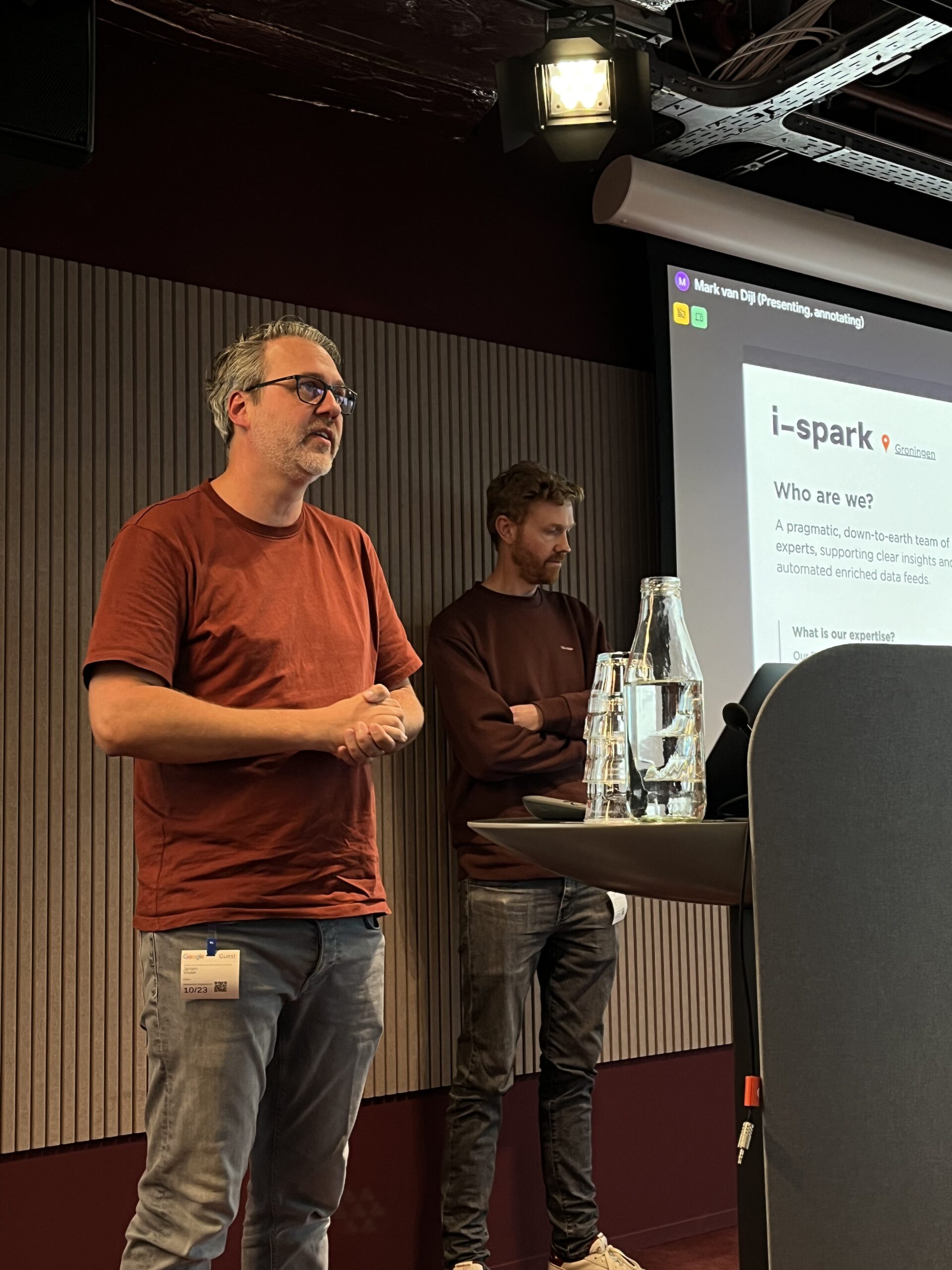
Together with Superstruct Digital at the Looker Meetup in Amsterdam in October 2025, we shared the benefits of LookML and shared semantic models to keep analytics aligned as usage grows. The session focused on what holds up once dashboards are used daily by many different roles.
- Structuring business logic so it remains readable over time;
- Preventing dashboards from multiplying without ownership;
- Keeping definitions consistent across teams and use cases;
- Making analytics accessible without losing control.
Our passion is our customers' data and the insights it holds. We partner with companies, helping them spark their data into a powerful tool for growth. Our role is to help you move with speed and intent, turning commercial, operational, and time-related goals into real results.
The results? Efficient operations, better decision-making, and often a visible impact on your bottom line.
Questions we often hear about working with Looker.
Looker is used to create consistent, trustworthy reporting across teams by defining business metrics once and reusing them everywhere. It is commonly used for performance tracking, operational reporting and decision support in environments where many people rely on the same numbers.
Most BI tools embed logic inside dashboards. Looker separates logic from visualisation by placing definitions in LookML. This makes it easier to keep metrics aligned as reporting grows and questions change.
No. LookML is written so others do not need to touch it daily. Analysts and data teams define the logic, while business users explore data through the interface using pre-defined metrics and dimensions.
Yes, when models are designed carefully. Looker works well for non-technical stakeholders because it guides exploration through shared definitions rather than raw tables.
Looker is a good fit when consistency, governance and reuse matter. It may be less suitable for very small setups or short-lived reporting needs where speed matters more than alignment.
Looker sits on top of a data warehouse and queries data directly. It does not store data itself. This makes it a strong fit for modern data platforms where transformation happens upstream.
Yes. Looker’s modelling approach supports shared logic with flexibility for local variation, which makes it suitable for multi-brand or multi-region environments.
Yes. Looker often acts as the analytics and exploration layer on top of a composable data platform, consuming curated datasets without owning transformations.
No demos, no pitches. Just a practical discussion about how Looker works in real environments and whether it fits your reporting goals.